Mixing Colostrum in Water vs Milk: Taste, Texture, Absorption
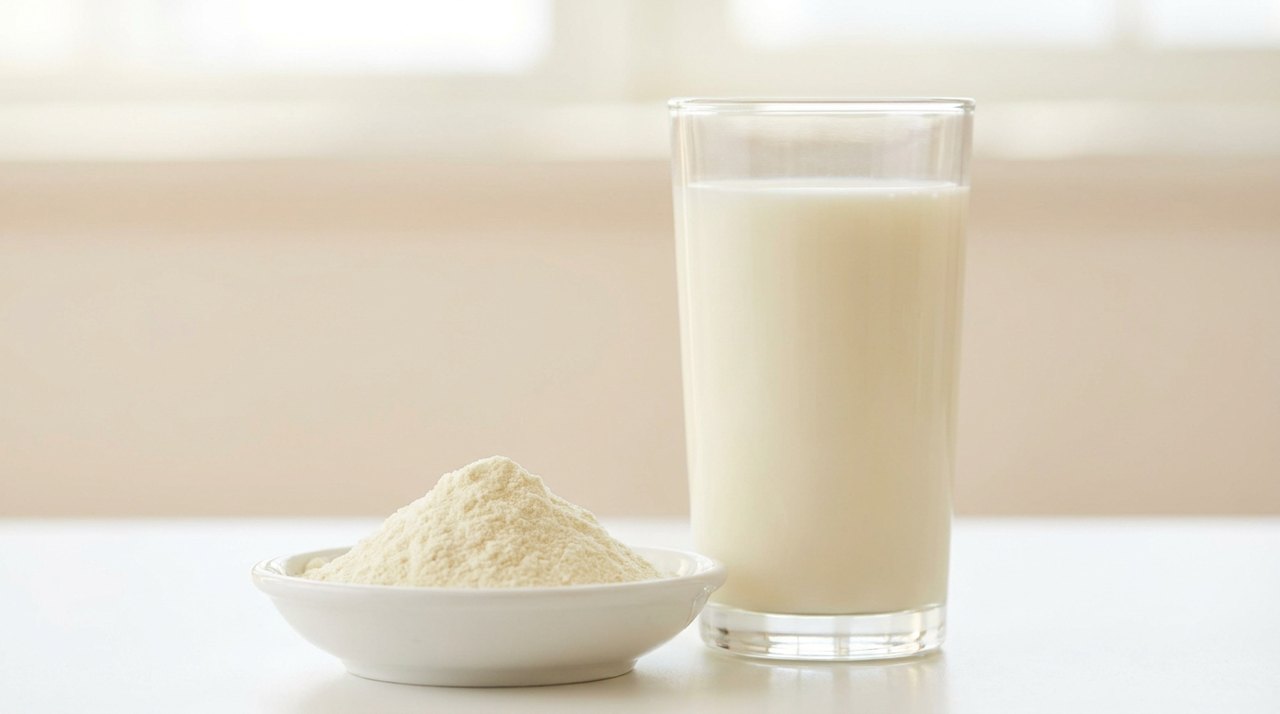
Colostrum powder has to be mixed into something before you drink it, and the two most common choices are plain water and milk. The decision affects more than convenience: taste, texture, and possibly even how well certain components survive the trip through your stomach can differ between the two. Here is an honest look at how water and milk compare, where the evidence is solid, and where it is mostly practical experience rather than clinical data.
Taste: Milk Masks, Water Reveals
Colostrum powder has a mild, slightly creamy, faintly sweet-savory flavor that most people describe as "milky" — unsurprising, since bovine colostrum is an early form of milk. Mixed into water, that flavor is front and center. Some people find it pleasant or at least neutral; others notice a lingering dairy aftertaste that they would rather not sip on its own.
Milk, by contrast, absorbs colostrum's flavor almost completely. Because the two share a similar taste profile, a scoop of colostrum in a glass of milk is nearly undetectable. If you are flavor-sensitive or easing into a daily habit, milk (or a milk-based smoothie) is the more forgiving option. For flavored ways to work colostrum into your routine, our colostrum recipes page covers smoothies, lattes, and other combinations that hide the taste entirely.
Texture: Where Water Struggles
Texture is the biggest practical difference, and it favors milk.
- In water: Colostrum powder does not dissolve fully — it disperses. In cold water it tends to clump, float, and leave a thin film on the surface. The mixture is watery with occasional grainy bits, which some people find off-putting.
- In milk: The fat and proteins in milk help the powder integrate more smoothly. The result is creamier and more uniform, closer to a thin milkshake than a chalky suspension.
A few tricks improve texture in either liquid: use room-temperature (not ice-cold, not hot) liquid, add the powder gradually while stirring, use a small whisk or shaker bottle rather than a spoon, and let it sit for a minute before a final stir. Blending works too, though it introduces foam.
Shopping for colostrum? Our current best-value pick is BIOMIXA grass-fed colostrum powder on Amazon.
Absorption: What the Evidence Actually Says
This is where marketing often outruns science, so it is worth being careful.
The temperature question matters more than the liquid
Colostrum's most-discussed components — immunoglobulins like IgG, lactoferrin, and growth factors — are proteins, and proteins denature with heat. Mixing colostrum into hot coffee or boiling milk may degrade some of these compounds. Most manufacturers recommend liquids below roughly 45–50°C (113–122°F). Whether partially denatured immunoglobulins lose all biological relevance is not fully settled, but cool or lukewarm liquid is the cautious choice regardless of whether you pick water or milk.
Does milk or water change bioavailability?
There is little direct clinical research comparing colostrum absorption in water versus milk, so any strong claim here should be treated skeptically. A few reasonable, evidence-adjacent points:
- Some research on immunoglobulin survival suggests that food or liquid in the stomach may buffer stomach acid, which could help a portion of colostrum's proteins pass through less degraded. Milk, being a protein- and fat-containing food, may provide more buffering than plain water — but this is an inference, not a demonstrated outcome.
- Conversely, some manufacturers recommend taking colostrum on an empty stomach with water, reasoning that faster gastric transit means less time exposed to acid and enzymes. This is also plausible but not well proven.
- In practice, the differences between these two approaches are likely modest. Consistency of daily use almost certainly matters more than the mixing liquid.
In short: no rigorous study shows that water beats milk or vice versa for absorption in humans. Choose based on taste, texture, and digestive comfort, and hold the absorption claims loosely.
Side-by-Side Comparison
| Factor | Water | Milk |
|---|---|---|
| Taste | Mild dairy flavor is noticeable | Flavor almost fully masked |
| Texture | Thin, prone to clumping and film | Creamier, smoother blend |
| Calories added | None | ~80–150 kcal per cup, depending on milk type |
| Lactose load | Only what the powder contains | Powder plus milk's lactose |
| Empty-stomach dosing | Easy | Counts as food for most purposes |
| Convenience | Available anywhere | Requires refrigeration |
Special Considerations
Lactose sensitivity
Colostrum powder itself contains some lactose. If you are lactose-sensitive, adding it to regular milk stacks two lactose sources, which may cause bloating or discomfort. Water, lactose-free milk, or unsweetened plant milks (almond, oat, coconut) are gentler options — plant milks also do a reasonable job of masking taste and improving texture.
Timing and routine
If you follow the common empty-stomach recommendation, water is the natural pairing, typically 20–30 minutes before breakfast. If colostrum is part of your breakfast or a post-workout shake, milk fits more naturally. Neither approach has strong evidence of superiority, so pick the one you will actually stick with. Our guide on how to use colostrum powder walks through timing, dosing, and mixing technique in more detail.
The Bottom Line
Water is the minimalist choice: zero calories, works anywhere, and suits empty-stomach routines — at the cost of a noticeable taste and a thinner, sometimes clumpy texture. Milk wins on taste and mouthfeel and may offer a slight theoretical buffering benefit, but it adds calories and lactose. The absorption debate is largely unresolved either way, so let your palate and your stomach decide. Whichever you choose, keep the liquid cool or lukewarm, and remember that colostrum is a dietary supplement — a consistent daily habit matters far more than the glass you stir it into.
BIOMIXA Bluegrass Colostrum
A grass-fed, unflavored colostrum powder that balances quality and price well — our pick for the best bang for your buck. Check the current price and reviews on Amazon.